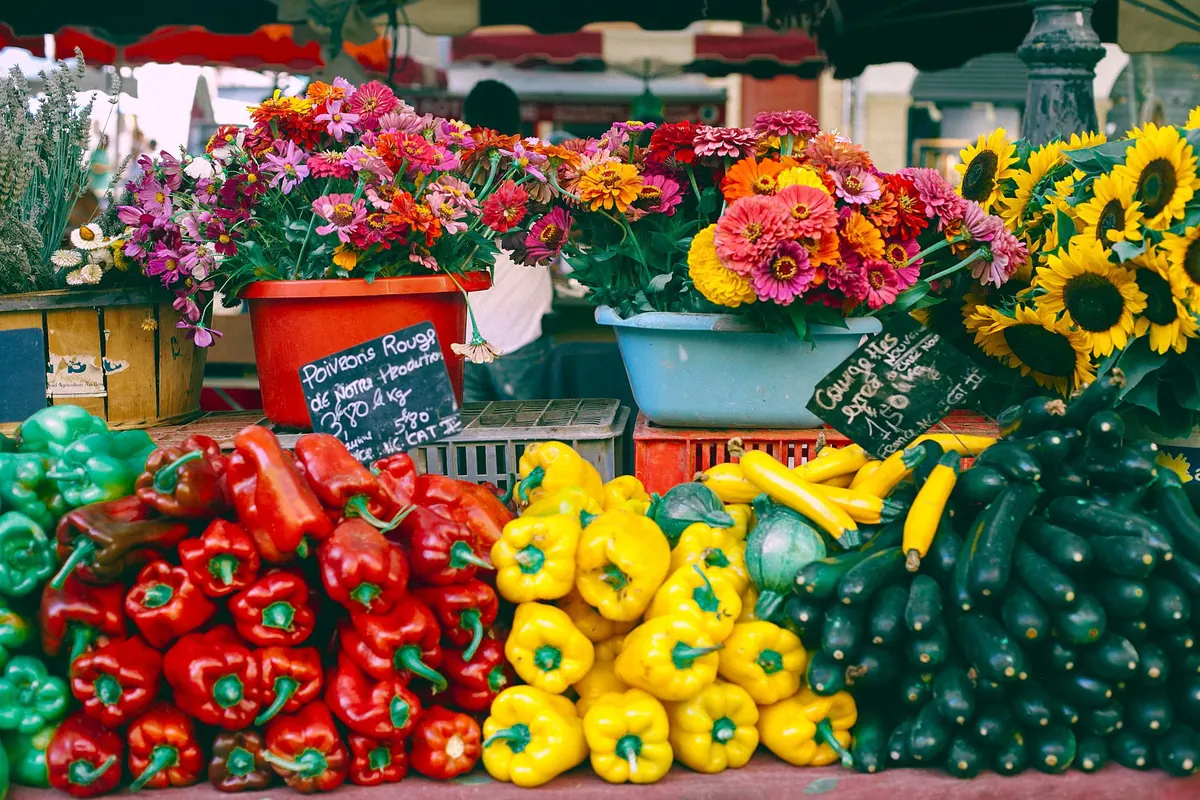
The first farmers market visit is a small act of courage. You walk in with one tote bag and no plan, and suddenly there are forty stalls, two dogs, a man shouting about tomatoes, and a queue you can't tell whether you're allowed to join. Nobody hands you a map. Nobody mentions that the best peaches are three tables from the back, or that the honey vendor will happily explain what makes hers different if you only ask.
Markets reward curiosity and punish hurry. Learn a handful of small habits — how to read the layout, how to talk to the people behind the tables, how to spend without regret — and the whole thing stops being overwhelming. It becomes the best two hours of your week.
Most markets follow a rough logic, even when they look chaotic. The stalls nearest the entrance catch the most foot traffic, so they tend to sell coffee, pastries, and things you can eat with one hand. Deeper in, you'll usually find the growers with seasonal produce. Along the edges and in the back rows, look for larger operations selling by the box, seconds, and bulk quantities.
Walk the entire market once with your hands empty. Not browsing — scouting. Note two or three tables you want to return to. This single habit prevents the classic beginner mistake: buying a bag of onions at the second stall, then discovering better onions at a lower price eleven stalls later.
While you walk, notice who is actually growing what they sell. Some vendors are farmers; others buy wholesale and resell. Neither is a scandal, but you should know which you're dealing with. Ask plainly: "Do you grow these yourself?" It's a normal question, not an accusation, and most growers answer with visible pride. Market rules differ from place to place — some require everything on the table to be producer-grown, others don't — so asking is the fastest way to learn what your market is made of.
Also pay attention to the quiet corners. A vendor with no queue has time to talk, and talking is where the value is.
Peaches bruise, tomatoes split, berries crush. Instead of squeezing, ask: "Which of these would you pick for eating tonight?" You'll get better fruit and a better conversation.
Many vendors now take cards, but not all do, and a line moves faster when you can hand over exact cash. Keep a stack of small notes in a separate pocket so you aren't digging through a bag with twelve people waiting behind you.
If you take a taste, it's perfectly polite to say thank you and walk on without buying. It's less polite to graze your way down the row.
Nine in the morning is not the moment. If you want a better price, buy volume — "Any deal if I take the whole box?" — or shop in the last half hour, when vendors would rather sell than pack produce back into the van. Ask once, accept the answer, and don't sulk.
Once you've chosen, move to the end of the table to find your wallet. It keeps the front clear for everyone else.
One sentence does more work than any of these: "What's the best thing on your table today?" Vendors know their own stock, they know what peaked yesterday, and they will point you at it.
Markets are not automatically cheaper, and they aren't meant to be. You're often paying for riper produce, shorter travel, and varieties bred for flavour rather than shelf life. That's the trade, and it's a fair one — as long as it's a choice rather than an accident.
Decide before you arrive what this trip is for. A week of vegetables is a different budget from a gentle Saturday morning treat. Withdraw cash and treat that amount as a hard ceiling; when it's gone, you're finished. It's a crude system that works remarkably well.
Compare units, not numbers. One table sells by weight, another by the piece, another by the bunch, so two similar-looking prices can mean very different things. Do the arithmetic before you commit, not after.
Give yourself one planned splurge — the expensive cheese, the odd mushroom, the jar of something you can't pronounce — and keep the rest of the shop boring and practical. If money is genuinely tight right now, treat the market as an occasional outing with a firm figure attached rather than a weekly habit, and consider splitting a bulk box with a friend. For anything involving debt or a household budget you're already struggling with, a conversation with a qualified financial adviser is worth more than any market tip.
Unpack as soon as you get home. Greens go into a damp cloth in the fridge, berries stay unwashed until you eat them, and anything you bought too much of gets frozen or cooked that afternoon rather than quietly dying in a drawer. Deal with it now and the market trip has genuinely fed you; leave it until Tuesday and you've bought compost.
Then take two minutes to write down what you'd buy again, what you'd skip, and the names of the people you liked. Next week, go back to those tables and say hello. That's the whole secret of market shopping: the first visit is logistics, and every visit after it is a relationship. Vendors remember regulars, and regulars get the good stuff held back, the honest answer about what's past its best, and the box of seconds at a friendlier price.
Bring cash, walk the loop once, ask what's good, and buy less than you think you need. You'll be a regular before the season turns.
Photo: Maria Orlova / Pexels

A practical guide to shopping local markets in the rain: when to go, which produce survives the wet, how to layer...

A practical guide to the seven mistakes that trip up first-time market shoppers—from arriving too late to...

Atmosphere, stock, haggling rules and budget habits compared, so you can pick the right market for a Saturday...


Discover the best gems of the market.
